A fixer is a local professional hired by visiting journalists to make reporting possible. Fixers arrange access, permits, interviews, transport and translation, explain the local context and judge risk on the ground.
Most answers to what is a fixer in journalism stop at that list of tasks. Perhaps you are about to commission your first foreign story, or keep seeing “additional reporting by” at the foot of articles. Either way, the task list is only half of it. The harder questions are about credit, ethics and who carries the risk once the story is out.
What Is a Fixer in Journalism?
A fixer is the person who lets an outsider report somewhere they do not know. Usually a local journalist, producer or interpreter, the fixer connects a visiting reporter or crew with the people, places and permissions a story needs.
The job has no official status, no licence and no fixed description. Reporters Without Borders, which has documented violence against fixers, notes that the role is indispensable in conflict reporting even though fixers enjoy no formal recognition.
Many people doing the work prefer another title. “Local producer” and “field producer” are common, and some organisations now say “local reporting partner”. The word “fixer” stays in use mainly because editors everywhere recognise it.
What Does a Fixer Actually Do on a Story?
A fixer does whatever stands between a visiting journalist and a publishable story. In practice, that work falls into five areas, and a good fixer moves between them several times a day.
Logistics and Permissions
Transport, accommodation, local SIM cards and drivers are the visible part. Less visible is the paperwork. A fixer knows which ministry issues press clearance, which district official expects a courtesy call and which location needs its own pass. Often they know because they have watched other crews get it wrong.
Access and Sources
Finding the right people is where fixers earn their reputation. One video reporter quoted by IJNet put it simply: the story is only as good as the characters the fixer finds. That means persuading a reluctant official, locating a witness who moved villages, or explaining why a family should trust a camera crew at all.
Translation and Interpretation
Most fixers interpret interviews, translate documents and read local media for the visiting team. The quality matters more than many crews realise. A fixer who summarises, softens or tidies an answer changes the journalism, so ask for close, first-person interpretation, the standard used in broadcast interpreting, wherever quotes will be used.
Context and Editorial Judgement
A fixer tells you what the story means locally. Is that protest new or routine? Is the official you are about to interview credible, or a political appointee everyone ignores? Good fixers challenge a weak premise before you spend two days chasing it.
Safety on the Ground
Fixers read the street. They notice when a crowd turns, when a checkpoint is unusual, and when a “friendly” follow-up call is really surveillance. Experienced correspondents tend to agree on one rule: ignore a fixer’s safety advice and you will regret it.
The work also runs across the whole assignment, not just the shoot days.
| Stage | Typical fixer tasks |
|---|---|
| Before arrival | Research, permissions, booking interviews, route and risk planning |
| During fieldwork | Interpreting, driving or managing drivers, finding new sources, reading local media |
| After the crew leaves | Fact-checking follow-ups, translating documents, chasing quotes, monitoring reaction |
Fixing overlaps with several other jobs, which is why the titles get confused.
Fixer, Stringer, Producer or Interpreter: How the Roles Differ
The roles differ mainly in who owns the published work and how far the person shapes it. A stringer files their own stories; a fixer enables someone else’s.
| Role | What they deliver | Usually credited? | Editorial input |
|---|---|---|---|
| Fixer | Access, logistics, interpreting, context and safety for a visiting team | Rarely, sometimes “additional reporting” | Often large, rarely acknowledged |
| Stringer | Their own stories, photos or footage, filed per piece to an outlet | Yes, usually a byline | Full, as the reporter |
| Local or field producer | Fixer work plus formal production duties, often on a contract | Increasingly, in programme credits | Formal and recognised |
| Interpreter | Accurate language transfer in interviews, briefings or trainings | Sometimes, in credits or acknowledgements | Limited to language and cultural accuracy |
In real assignments the lines blur, and one person may fix on Monday and string for a wire service by Friday.
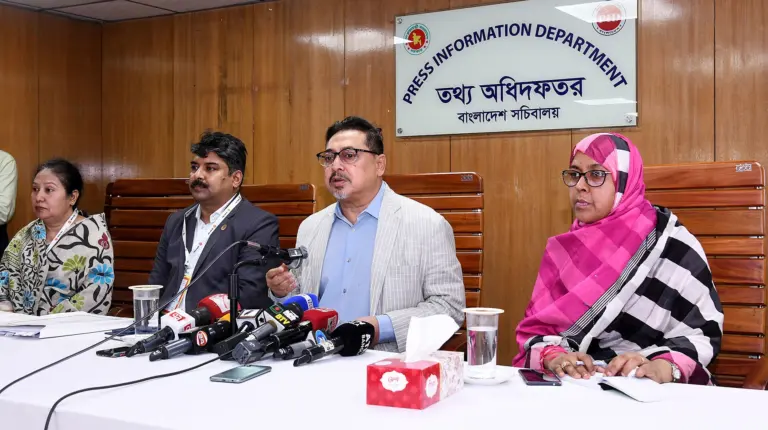
Interpreting on its own is a narrower job. In May 2026, for example, Dhaka Interpreters co-founder Md Monowar Hossain interpreted for Canadian investigative journalist Julian Sher at a training for reporters from Prothom Alo and Samakal in Dhaka. No access, permissions or logistics were involved, because the work was language alone. A fixer would have been handling all three.
Why Fixers Shape the Story More Than the Credits Suggest
Fixers influence content far more than the credits show. Some glossaries still describe them as purely logistical helpers who play no part in production, and research does not support that view.
The assumption is understandable. Fixers rarely write a sentence of the final piece, and their names seldom appear, so the work looks like support. Three bodies of research describe something closer to co-reporting.
| Study | What it found |
|---|---|
| Colleen Murrell, Foreign Correspondents and International Newsgathering: The Role of Fixers (Routledge, 2015) | Based on interviews with foreign correspondents; fixers are central to daily decisions on the road, not just logistical aides |
| Lindsay Palmer, The Fixers (Oxford University Press, 2019) | Interviews with 75 fixers in 39 countries; most described their work as creative and highly skilled |
| Peter Klein and Shayna Plaut, Global Reporting Centre survey (2017) | About 80% of fixers said they had challenged a correspondent’s editorial focus; only 44% of correspondents remembered being challenged |
Fixers remember steering the story; correspondents often do not notice being steered. The Global Reporting Centre findings on the journalist-fixer relationship, drawn from about 450 anonymous responses, are worth reading before your first commission.
If fixers shape the story, the obvious next question is whether they should be named in it.
Should a Fixer Get a Byline?
A fixer should get the credit they ask for, and no more than is safe. Credit is a professional right, but for some fixers a public name is a danger.
The same 2017 survey found that about 60% of correspondents said they never credited fixers, and around 80% of fixers said they wanted credit. Since then, more outlets add “additional reporting by” lines, and some offer shared bylines when a fixer did substantial reporting. A guide from Frontline Freelance Mexico, reported by GIJN, argues for shared bylines and award credit where the work justifies it.
| Credit option | When it fits | Risk to consider |
|---|---|---|
| No public credit, private reference | Hostile government, armed groups, sensitive investigations | Fixer loses portfolio evidence |
| Thanks or acknowledgement line | Light logistical support | Still identifies them locally |
| “Additional reporting by” | Interviews, sourcing, verification | Visible to authorities and subjects |
| Shared byline or programme credit | Substantial reporting or production | Highest visibility, highest exposure |
Before publication, ask the fixer, in writing, what credit they want. Ask again closer to the date if the political situation has shifted.
Who Carries the Risk After the Crew Leaves?
The fixer does. The visiting team flies home with the footage; the fixer stays with the officials, neighbours and armed actors who watched them work.
Press freedom groups have recorded the pattern for years. In 2015 the Committee to Protect Journalists highlighted the case of Mohammed Ismael Rasool, a fixer jailed in Turkey after his two VICE colleagues were released and sent home. Rasool spent 131 days in prison. In Afghanistan in 2009, journalist Sultan Munadi was killed during the rescue of New York Times reporter Stephen Farrell, with whom he had been abducted.
Duty of care is the industry’s answer. The ACOS Alliance safety principles were drafted after the 2014 killings of James Foley and Steven Sotloff. They ask news organisations to show local journalists and freelancers the same concern as their own staff. In practice, that means:
- including the fixer in the risk assessment, as a named person with their own risks
- agreeing insurance, safety equipment and emergency contacts before fieldwork
- warning the fixer before publication, so they can prepare for any reaction
- keeping in touch for weeks afterwards, especially after a sensitive story
Support exists when things go wrong. The Rory Peck Trust offers freelance newsgatherers assistance grants, hostile environment training support and a therapy fund, and fixers who work freelance may qualify. Check the Trust’s current criteria directly, because they change.
Trauma is part of the risk too. Fixers interpret the worst testimony in the first person, then go home to the same community, so GIJN has reported calls to budget for their mental health support.
Paying a Fixer Is Not Paying a Source
Paying a fixer for professional work is normal and ethical; paying an interviewee for information is a separate decision with separate rules. The two get mixed up more often than editors like to admit.
Most newsrooms discourage or ban paying sources, because money can shape what people say. A fixer’s fee covers skilled labour, so it raises no such problem. The trouble starts when money passes through the fixer. An IWMF report described fixers quietly folding “interview fees” into their own charges, without the journalist knowing.
Close that gap at the start:
- Agree in writing what the fixer’s fee covers and what it does not.
- Decide your outlet’s policy on any payment to interviewees, including travel costs or lost wages.
- Ask the fixer to log every expense paid to anyone else, with receipts where possible.
- Pay the fixer in full and on time; late payment comes up again and again in fixer surveys.
None of this is an accusation. Fixers are often asked by sources for money, and a clear policy gives them a way to say no.
Working With a Fixer in Bangladesh
Bangladesh shows how much of a fixer’s value is local detail. Permissions, politics and language each work differently from what a visiting crew might expect.
Visas and Press Clearance
A fixer cannot fix the wrong visa. Foreign journalists generally need press clearance through the Ministry of Information and a journalist visa, and the Bangladesh High Commission in London describes the journalist visa process on its site. Rules change, so confirm the current steps with the Bangladesh mission in your own country before you book flights.
Reporting on a tourist visa is a real risk. In 2017, foreign photographers travelling on tourist visas were detained in Cox’s Bazar and initially suspected of espionage, according to VOA.
Hartals and Political Shutdowns
A hartal is a shutdown called by a political group, usually enforced on the streets. Transport stops, shops close and, at times, vehicles are attacked; media cars have been vandalised during past hartals. A Dhaka fixer will move interviews, swap a car for a motorbike or reschedule a whole day when one is called overnight.
Rohingya Camps in Cox’s Bazar
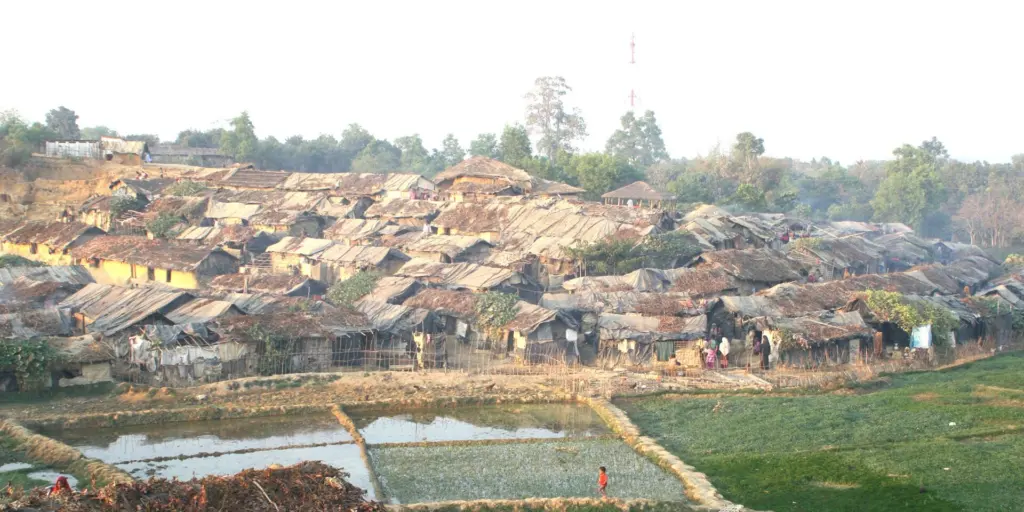
Camp access runs through the Refugee Relief and Repatriation Commissioner (RRRC). The RRRC website lists the access-pass procedure for foreign nationals, and each camp has a Camp-in-Charge who expects to know when a crew is filming. Requirements and processing times vary, so check them with the RRRC well ahead of travel. A fixer can prepare the paperwork and the courtesy calls, but cannot replace the pass.
Regional Languages and Dialects
Standard Bangla will not get you everywhere. Research by Translators without Borders found that more than a third of Rohingya refugees did not understand a simple message in Chittagonian, despite the two languages overlapping heavily.
| Area or community | Language you may need | Why it matters |
|---|---|---|
| Dhaka and most cities | Standard Bangla, English | Officials and urban interviewees |
| Chattogram and Cox’s Bazar | Chittagonian | Host communities near the camps |
| Rohingya camps | Rohingya | Refugee testimony; Chittagonian is not a safe substitute |
| Sylhet division | Sylheti | Rural interviews, diaspora stories |
| Chittagong Hill Tracts | Chakma, Marma and other Indigenous languages | Separate permissions may also apply |
Before hiring, ask which of these the fixer speaks, and which they would bring in a second interpreter for. The site’s languages page lists what is covered in-house.
How Do You Find and Vet a Good Fixer?
The best fixers come through people who have worked with them. Recommendation from a trusted colleague beats any directory, because it tells you how the fixer behaves under pressure.
- Ask reporters, producers and editors who covered the same country recently.
- Check press freedom groups, journalist unions and local newsrooms for names.
- Use databases such as WorldFixer as a starting point, then verify references yourself.
- Ask for two or three recent clients and actually call them.
- Test languages with a short call, ideally including a regional variety you need.
- Ask how they handled a permit refusal, a police stop or a hostile interviewee.
- Check for political ties or family links that could compromise the story.
Women reporters, in particular, should ask colleagues about conduct as well as competence. Some press safety guides note documented cases of harassment by fixers, and a reference call is the moment to ask.
For Bangladesh, an agency that provides a fixer and interpreter for journalists is one option among several. Vet it the same way.
What Should You Tell a Fixer Before Fieldwork Starts?
Tell the fixer the real story, including the parts you would rather not say aloud. A fixer who walks into a sensitive interview unaware of the angle cannot judge the risk to themselves or to sources.
GIJN’s guidance for fixers says they should get full disclosure of an investigation and its risks before agreeing to work. A useful briefing covers:
- the story, the likely angle and who might be upset by it
- every planned interview and location, and the backup plan for each
- working hours, rest days, meals and travel time
- what happens if anyone is detained, and who calls whom
- how footage and notes will be stored and shared
- credit, publication date and when the fixer will see the final version
Agree on a “stop” word too. If the fixer says it is time to leave, everyone leaves first and argues about it in the car.
What a Bad Fixer Relationship Looks Like
A bad relationship usually shows itself in the first two days. The signs run in both directions.
On the fixer’s side, warning signs include interviews that all sound the same, sources who seem to be relatives or friends, vague answers about permits, and pressure to pay interviewees. Interpretation that is suspiciously short is another clue. A thirty-second answer rarely translates into five words.
On the crew’s side, it looks like 16-hour days with no food breaks, angles kept secret, and safety advice overruled because the deadline is close. Late payment and silence after publication complete the picture. Fixers talk to each other, so a team that behaves badly will find the next trip harder to staff.
Do You Actually Need a Fixer?
Not every foreign story needs one. The decision depends on language, access and risk more than on budget.
You probably need a fixer if:
- you do not speak the languages your interviewees use
- the story needs permits, passes or official cooperation
- you are working in a camp, conflict area or politically tense period
- you have days, not weeks, to find characters
You might manage without one if:
- you are interviewing English-speaking experts in a capital city
- a local newsroom partner is already handling access
- the story is document-based and needs only translation
Even then, many experienced correspondents still hire one, at least for the first trip, because the cost of getting the context wrong usually arrives after publication.
FAQ
Where Does the Term Fixer Come From?
Reporters Without Borders traces the use of “fixer” in its current journalism sense to coverage of the 1991 Gulf War. The word spread further during the war in Afghanistan from 2001, when visiting media hired large numbers of local reporters to arrange their work.
Why Do Some Fixers Dislike the Word Fixer?
Some see “fixer” as a label that reduces skilled journalism to errands, and prefer “local producer” or “field producer”. Others keep it because editors worldwide recognise it instantly. Neither view is wrong; the polite approach is to ask each person which title they want in credits.
Is a Fixer a Journalist?
Often, yes. Many fixers are working reporters, editors or producers in their own country who fix between their own assignments. Some come from translation, academia or NGO work instead. Treat them as professionals either way, since the research shows they make editorial calls.
How Do You Become a Fixer for Foreign Journalists?
Most fixers start with local journalism, interpreting or production work, then build a network of visiting reporters by word of mouth. Strong languages, reliable contacts, knowledge of permit rules and a calm temperament matter more than any certificate. Safety training is worth getting early.
Can a Fixer Get You Into Places You Have No Permission For?
A fixer should not try, and a good one will refuse. Entering a restricted site without the right pass exposes your sources and the fixer to arrest long after you leave. Ask the fixer to secure the permission properly, or rethink the shot.
Should a Fixer See the Story Before Publication?
Practice varies. Some outlets forbid showing drafts to anyone outside the newsroom, to protect editorial independence. Others, and guides from fixer groups, recommend letting fixers review sensitive passages for safety and accuracy. A middle path is to read them the parts that mention them or their sources.
Is a Fixer the Same as a Guide or Driver?
No. A guide shows visitors around and a driver gets them there, but neither normally arranges interviews, interprets or judges editorial risk. Some fixers drive or hire drivers, and a driver can become a valuable source of local knowledge, but the roles are distinct.
Can One Fixer Cover the Whole of Bangladesh?
Rarely. A Dhaka-based fixer may handle national permissions and travel, then bring in local contacts or interpreters for Cox’s Bazar, Sylhet or the Chittagong Hill Tracts. Ask in advance who else will join the team, and vet those people too.
What Should You Do If a Fixer Is Threatened After Publication?
Act quickly and take the fixer’s lead. Contact your editor and the outlet’s security team, document the threat, and consider support from CPJ, the Rory Peck Trust or local journalist organisations. Relocation, legal help or removing their credit online may be needed.
Can a Fixer Help Remotely?
Yes, for some tasks. A fixer can research, book interviews, interpret by video call or arrange remote interpreting before you arrive. Remote work cannot replace someone reading the mood of a crowd, though, so plan field support for any risky location.
Conclusion
A fixer is a local professional who makes foreign reporting possible and often shapes it more than the credits show. Treat the role as journalism. Brief the fixer fully, agree credit and payment in writing, and include them in risk planning.
The fixer stays when you leave, so stay in touch after publication. In Bangladesh, Dhaka Interpreters offers fixing and interpreting for visiting media, and the same checks apply to anyone you hire.