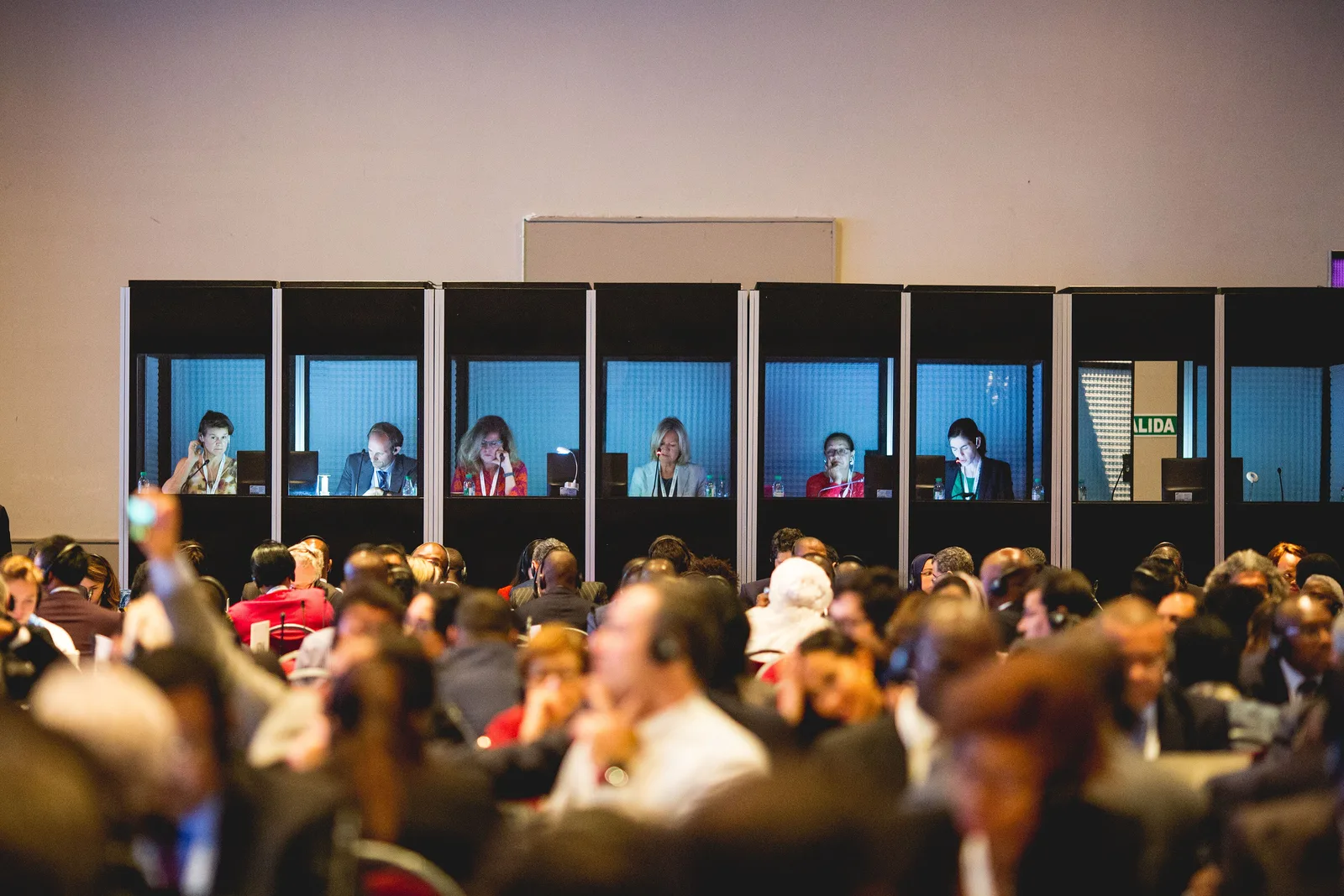
In consecutive interpreting the speaker pauses and the interpreter speaks in turn; in simultaneous interpreting the interpreter speaks at the same time, usually from a booth into headsets. Consecutive suits interviews, meetings and site visits. Simultaneous suits conferences, long programmes and audiences that need the full speech without the time doubling.
The consecutive vs simultaneous interpreting question usually comes up when an event is already on the calendar. The venue is booked and the speakers are confirmed, but nobody has decided how the Bangla speakers and the English speakers will follow each other. The choice affects your programme, your equipment, your budget and how the room feels.
This guide explains both modes, the options in between, and what each means for an event in Dhaka.
How Consecutive Interpreting Works
The speaker talks for a sentence or a few, then pauses. The interpreter, usually taking notes, gives the same message in the other language. Then the speaker continues.
Consecutive interpreting needs no equipment beyond a microphone in a large room. It gives the interpreter a moment to get names, numbers and terms exactly right, and it lets both sides hear every word in their own language.
The cost is time: everything is said twice, so a session takes roughly twice as long. A 30-minute speech becomes an hour.
How Simultaneous Interpreting Works
The interpreter listens and speaks at once, a few words behind the speaker. In a conference, interpreters sit in a soundproof booth with a view of the room, hear the speaker through headphones and speak into a microphone; the audience listens through receivers and headsets on their own channel.
Because the work is so demanding, simultaneous interpreters work in pairs and take turns, typically about every 30 minutes. AIIC, the international association of conference interpreters, describes language teams alternating in 30-minute shifts. The interpreter off the microphone stays in the booth, noting numbers and names for their colleague.
Simultaneous keeps the programme at its natural length and lets the audience react to the speaker in real time.
The Options in Between
Whispered Interpreting
Whispered interpreting (also called chuchotage) is simultaneous interpreting spoken quietly to one or two listeners sitting next to the interpreter. It needs no equipment, which makes it useful for a visiting delegate in a meeting run in Bangla, or a guest at a ceremony. It does not scale: more than two listeners, or a long day, and it becomes tiring for everyone.
Portable Systems
A portable interpreting system, a small transmitter for the interpreter and pocket receivers for listeners, works for site visits, factory tours and small groups on the move. It gives you simultaneous interpreting without a booth.
Remote Simultaneous Interpreting
For hybrid or online events, interpreters can work remotely on platforms with an interpretation feature, such as Zoom, while participants choose their language channel. It saves travel, but needs a stable connection and good audio from every speaker. Our remote interpreting service covers calls and online sessions.
Consecutive vs Simultaneous at a Glance
| Consecutive | Simultaneous | |
|---|---|---|
| How it sounds | Speaker pauses, interpreter follows | Interpreter speaks over the speaker, a few words behind |
| Time | Roughly doubles each session | No extra time |
| Equipment | None, or a microphone | Booth, interpreter console, receivers and headsets (or a portable system) |
| Interpreters | Usually one; two for a long day | Two per language pair for sessions over about an hour |
| Best for | Interviews, meetings, negotiations, site visits, press conferences, Q&A | Conferences, summits, long workshops, multilingual programmes, live broadcasts |
| Accuracy on detail | Very high: time to check names and figures | High, with a team in the booth to catch numbers and names |
Which One Does Your Event Need?
Ask four questions:
- How many people need the interpretation? One or two: whispered. A small meeting: consecutive. A room: simultaneous.
- How long is the programme? If doubling the time would wreck the schedule, choose simultaneous.
- How interactive is it? Negotiations and interviews benefit from consecutive, where everyone hears every word and there is time to think.
- How many languages? With more than two languages, simultaneous is almost always the only practical option.
Many events mix modes. A conference might run its plenary sessions in simultaneous, its breakout groups in consecutive, and give a visiting minister whispered interpreting at the dinner.
Running Simultaneous Interpreting in Dhaka
Several practical points come up again and again for events in Dhaka:
- Equipment. Large hotels and conference venues in Dhaka can usually supply sound systems; interpreting booths and receivers often come from specialist suppliers. Book the equipment when you book the interpreters, not the week before.
- The booth’s view. Interpreters need to see the speakers and the screen. A booth placed behind a pillar or at the back of a deep hall costs accuracy.
- Bangla and English, and more. Bangla and English is the core pair. Where French, Spanish, Chinese or Arabic join, interpreters may work through relay, for example from French into Bangla directly or via English, which needs planning.
- Material in advance. Agendas, slides, speeches and a list of speakers with names and titles make a real difference. Bangladeshi names, ministries and programmes have official English forms; the interpreters should have them.
- A technical check. A sound check with the interpreters before the doors open avoids the most common failures: a channel left on the wrong language, receivers without batteries, or a speaker without a microphone.
The conference and simultaneous interpreting service covers the interpreters, help arranging booths and headsets through local suppliers, and the briefing.
What It Means for Cost
Consecutive interpreting usually costs less: one interpreter, no equipment. Simultaneous adds a second interpreter for sessions over about an hour and, for a room, an equipment line for the booth and receivers. Our guide to interpreter cost in Bangladesh explains how quotes are built, and every quote lists interpreting and equipment separately.
Choosing consecutive to save money can be a false economy on a long programme: the doubled time may cost more in venue hours, catering and lost agenda than the booth would have.
Frequently Asked Questions
Is Simultaneous Interpreting Less Accurate Than Consecutive?
Not when it is done by trained interpreters working in a team. Consecutive gives more time to check details, which is why it is preferred for interviews and negotiations, but a good booth team handles conference speeches accurately.
Can One Interpreter Do a Full Day of Simultaneous?
Not to a professional standard. For sessions longer than about an hour, two interpreters share the work in turns, which is the norm in conference interpreting.
What Is Whispered Interpreting?
Simultaneous interpreting spoken quietly to one or two listeners, with no equipment. It suits a guest in a meeting or a ceremony, not a full audience.
Do We Need Booths, or Is a Portable System Enough?
For a seated audience in a hall, booths give the interpreters quiet and a clear view. For site visits, tours and small groups moving around, a portable system is usually enough.
How Early Should We Book?
As early as you can, especially for simultaneous: the interpreters and the equipment both need to be confirmed, and preparation time with your material improves the result.
Conclusion
Consecutive vs simultaneous interpreting is a choice about time, scale and interaction. Consecutive fits conversations; simultaneous fits programmes. Many good events in Dhaka use both.
Send us the programme, the rooms and the languages, and we will recommend the setup, confirm interpreters and equipment, and quote it line by line.