Business etiquette in Bangladesh rests on hierarchy, hospitality and patience. Greet the most senior person first, accept the tea and dress conservatively. Treat a soft promise to “try” as a probable no until you have a date.
Most guides stop at “use your right hand and avoid alcohol”. That advice will not help when a factory visit in Gazipur collides with Eid traffic, or a ministry meeting moves twice in a week. Several popular lists also repeat half-right claims, such as a weekend that supposedly applies to everyone.
What follows is written for buyers, investors, diplomats and executives with real meetings booked in Dhaka or Chattogram.
What Guides to Business Etiquette in Bangladesh Often Get Wrong
The most common errors in online guides come from turning one sector’s habits into a national rule. Government offices, banks, buying houses and garment factories keep different calendars, and a single sentence about “the weekend” cannot cover all of them.
| Common claim | What is closer to the truth |
|---|---|
| The weekend is Friday and Saturday | True for government offices and most banks; many factories close only on one day a week, and some private firms work Saturdays |
| Business hours are 9:00 to 17:00, Sunday to Thursday | That is the government schedule; Ramadan hours are shorter, and private firms set their own |
| Never book a meeting at 13:00 because of prayer | Midday prayer time shifts through the year; Friday midday is the real gap to avoid |
| Address people as “Mr” plus their first name | Often fine, but “Md.” is a prefix meaning Mohammad, never a name on its own |
| Wait for a woman to offer her hand | Also works the other way: some men will not shake a foreign woman’s hand |
None of these errors will end a deal. However, each one can cost you a wasted morning, an awkward introduction or a meeting that never happens. The calendar is the place to start, because it decides when any of the other rules even apply.
When Is the Weekend in Bangladesh, and What Are Office Hours?
Government offices in Bangladesh work Sunday to Thursday, 9:00 to 17:00, with Friday and Saturday off. A 30-minute break for lunch and midday prayer usually falls between 13:00 and 13:30. Ministries, regulators and most state bodies follow this pattern, and so do most banks.
Factories are different. Under the Bangladesh Labour Act 2006, a factory worker is entitled to one weekly holiday, and shop and commercial staff get a day and a half. In practice, many garment units work on Saturday and close on Friday, though the day varies. The authorities have at times also fixed different weekly closing days for particular industrial areas, so a Friday-only rule is not guaranteed either.
| Type of counterpart | Usual working days | What to check |
|---|---|---|
| Ministries and government agencies | Sunday to Thursday | Ramadan hours, and whether the official is travelling |
| Banks | Sunday to Thursday | Branch hours, which are set separately by the central bank |
| Multinationals and large corporates | Usually Sunday to Thursday | Some keep Saturday as a half day |
| Buying houses and liaison offices | Often Saturday to Thursday | Ask, because practice varies widely |
| Garment and textile factories | Six days, one weekly holiday | Which day the unit actually closes |
The safest habit is to ask your counterpart which day they are off before you build an itinerary around it. For example, a Saturday factory visit can fill a day when the ministries are shut.
Ramadan, Eid and the Holiday Calendar Around Your Visit
Ramadan changes the working day more than any other factor. Government offices close earlier in the afternoon during the fasting month, and banks and factories set their own hours. People who are fasting are still working, but energy drops in the afternoon, and evenings fill up with iftar gatherings.
The two Eids matter even more. Each year the Ministry of Public Administration publishes the official holiday list, usually approved in October or November for the year ahead. Government offices often close for close to a week around each Eid, and many private firms follow.
Islamic dates depend on the moon, so the National Moon Sighting Committee confirms them only days ahead. The dates below are projections and can move by a day or more.
| Event | Expected timing in 2027 | What it means for business |
|---|---|---|
| Ramadan begins | Around 8 or 9 February | Shorter office hours; no daytime meals in front of fasting hosts |
| Eid ul-Fitr | Around 10 March | Several days of closures; travel chaos the week before |
| Eid ul-Adha | Around mid-May | Another long closure; factories may close longer |
| Independence Day | 26 March (fixed) | National holiday; offices closed |
| Bangla New Year (Pohela Boishakh) | 14 April (fixed) | National holiday; festive traffic in Dhaka |
Check the current notices on the Ministry of Public Administration website before you book flights. In practice, the week before each Eid is poor for new negotiations. Millions of people head home to their villages, and nobody wants to start something they cannot finish.
How Should You Greet People in a Bangladeshi Meeting?
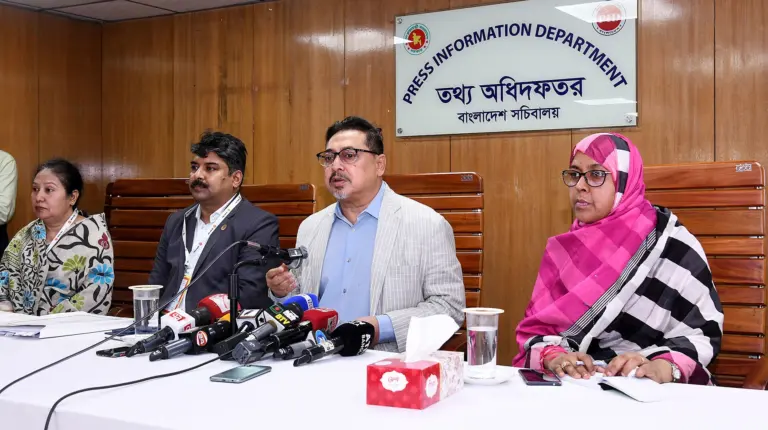
Greet the most senior person in the room first, then work outwards. A light handshake, a smile and a clear “good morning” are safe in almost any office.
Many Muslim Bangladeshis greet each other with “Assalamu alaikum”. Hindu colleagues may use “Nomoskar”, and English greetings are entirely normal in business.
Handshakes and Gender
Men usually shake hands with men, and the grip is gentler than a firm Western squeeze. With women, let her lead. If she offers her hand, shake it; if not, a nod with your right hand briefly on your chest is polite.
Foreign women should know the rule also runs the other way. The US government’s business travel guidance for Bangladesh notes that some Bangladeshis do not shake hands with visitors of the opposite sex. A withheld hand is about religious practice, not about you.
Names, Titles and the “Md.” Prefix
Bangladeshi names often confuse visitors because there may be no shared family surname. UK passport guidance on naming conventions in Bangladesh explains that “Md.” is a prefix meaning Mohammad. Brothers can carry different last names.
So “Md. Kamal Hossain” is not “Mr Md”. He might be Mr Hossain in a letter and Kamal Bhai among colleagues.
Ask once, early, how someone prefers to be addressed. Bangladeshis rarely mind the question, and the answer saves weeks of guesswork.
Apa, Bhai, Sir and Madam
“Apa” means elder sister and “Bhai” means brother. Both attach after a first name (“Rina Apa”, “Karim Bhai”) and signal warm respect between colleagues. In formal settings, especially ministries and older family firms, “Sir” and “Madam” are standard, even between Bangladeshis.
A visitor who calls a senior secretary “Bhai” in a first meeting will sound overfamiliar. Start with “Sir”, “Madam” or a title plus surname. Then switch when your counterpart invites it.
Business Cards
Bring plenty of cards, because they are exchanged freely and sometimes with every person in the room. Hand them over with your right hand, or with both hands for a senior person. Then read the card you receive before putting it away. English-only cards are fine; a Bangla reverse side is a courtesy, not an expectation.
What to Wear for Offices, Factory Visits and Ministries
Conservative and lightweight is the rule, and the setting decides how formal to go. Dhaka is hot and humid for much of the year, so a dark wool suit is not compulsory everywhere.
| Setting | Men | Women |
|---|---|---|
| Ministry or senior government meeting | Suit and tie, or jacket with tie | Trouser suit, long dress or salwar kameez; shoulders and knees covered |
| Corporate office | Shirt, tie optional, jacket in hand | Modest business wear, sleeves preferred |
| Factory visit | Long trousers, closed shoes, collared shirt | Long trousers or salwar kameez, closed flat shoes |
| Evening dinner or wedding invitation | Smart shirt or panjabi if offered | Smart modest dress, saree or salwar kameez |
Foreign women are not expected to cover their hair at business meetings. Even so, a light scarf in your bag is useful for a mosque visit or a conservative home.
Factory floors often require closed shoes for safety, so the sandals stay at the hotel.
Is Punctuality Expected in Dhaka?
Yes, from you. Visitors are expected to arrive on time, even though meetings often start late and run long. A Bangladeshi host who keeps you waiting 20 minutes is not being rude by local standards. A foreign guest who arrives 20 minutes late usually is.
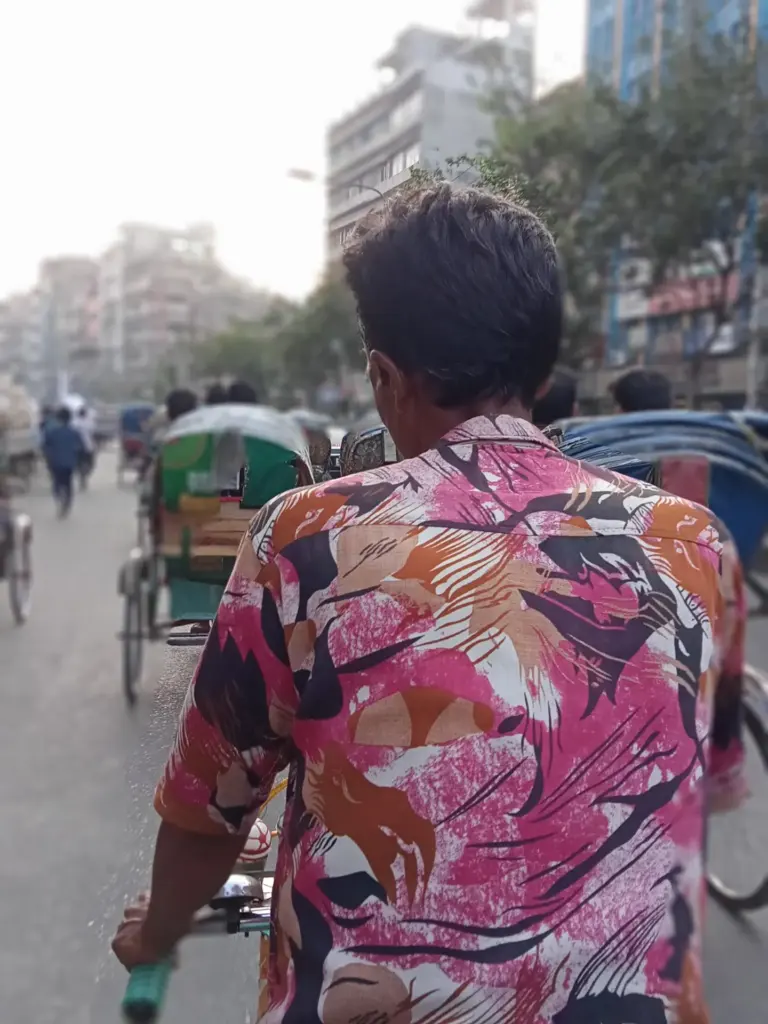
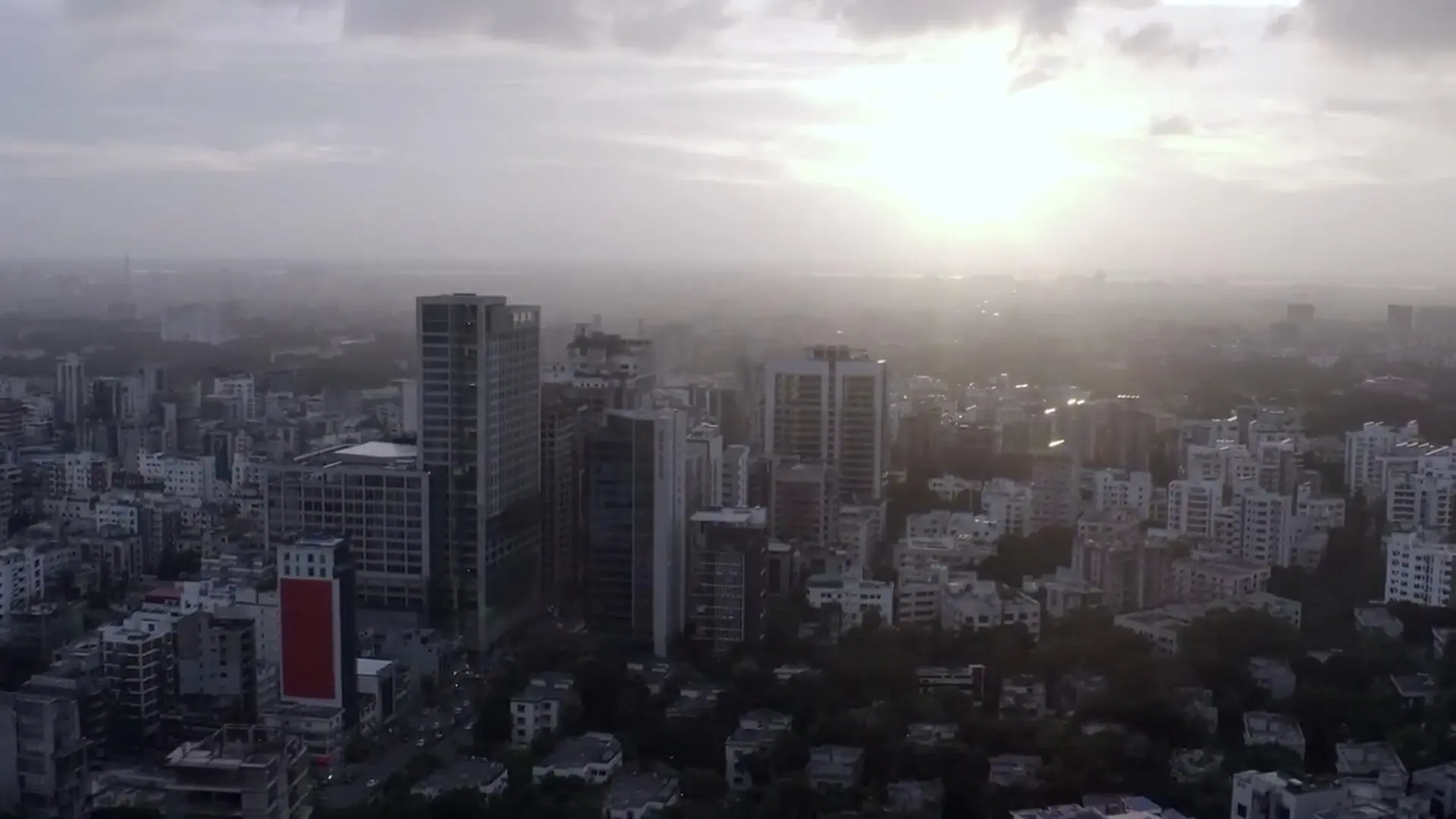
Dhaka traffic is the main reason schedules slip. A trip of a few kilometres can take an hour at peak times, and trips to the factory belts of Savar, Ashulia or Gazipur can swallow a morning. Chattogram is calmer, but the port roads jam badly.
Political strikes, known as hartals, and street demonstrations can also close roads with little notice. The UK government’s safety advice for Bangladesh warns that hartals have involved arson, violence and attacks on public transport. The US travel advisory for Bangladesh advises avoiding demonstrations, since even peaceful ones can turn violent. Check the latest advice from your own government before travelling, because conditions change.
A realistic schedule for a visiting team looks like this:
- Two meetings a day in Dhaka, or one if a factory visit is involved
- Meetings in the same district grouped on the same day (Gulshan, Banani and Tejgaon, for instance)
- A local driver and a host who can warn you of a hartal or blockade the night before
- Friday midday left free, because Jumma prayers empty offices and fill the roads around mosques
Tea, Meals and the Right-Hand Rule
Tea arrives at almost every meeting, often with biscuits, and accepting it is part of the meeting itself. Turning it down flatly can read as cold.
If you do not want it, take the cup and a sip, then let it sit. Nobody counts the sips.
Meals are where relationships deepen. Hosts may order more food than anyone could finish, and they will keep serving you. Leaving a little on the plate signals that you have had enough. During Ramadan, avoid eating or drinking in front of fasting hosts during daylight, and expect invitations to iftar at sunset instead.
Use your right hand for eating, passing food, handing over documents and giving gifts. The left hand is associated with hygiene, and that rule still holds in modern Dhaka boardrooms. Many Bangladeshis eat rice and curry with the fingers of the right hand. Cutlery is always available for guests, and nobody will judge you for using it.
Alcohol is not part of normal business hospitality. Over 91 percent of Bangladeshis are Muslim according to the 2022 census, and pork is equally off the table. Hindu counterparts may avoid beef, so a buffet works well when you are hosting a mixed group.
Who Actually Makes the Decision?
The most senior person decides, and that person may not be the one doing the talking. In family-owned groups, which are common in the garment and textile sector, the chairman or managing director usually signs off on anything significant. A fluent general manager may run the meeting but still need approval afterwards.
Ministries work through files. A joint secretary may like your proposal, but it still has to move up through the secretary and sometimes the minister. As a result, a friendly first meeting with a government office is a start, not an answer.
Match seniority where you can.
Sending a junior manager to meet a company chairman can be read as a sign that the deal does not matter to you. Similarly, a chief executive who visits in person opens doors that a dozen emails will not.
How Do Bangladeshi Counterparts Say No?
Rarely in that word. A direct refusal can cause loss of face for both sides, so disagreement is softened, delayed or passed through a third person.
Learning to read the soft forms is probably the single most useful skill on this list.
| What you hear | What it often means | What to ask next |
|---|---|---|
| “Yes, yes” with a head tilt | “Heard and understood” | “When can this be confirmed?” |
| “Chesta korbo” or “will try” | Unlikely, or not decided | “What would make it possible?” |
| “It will be a little difficult” | Probably no | “What is the main obstacle?” |
| “Inshallah” about a deadline | Hope, not a commitment | “Could the date go in the minutes?” |
| Silence, or a change of subject | Discomfort with the proposal | Raise it again privately, later |
The fix is not to push harder in the room. Instead, ask open questions that let your counterpart describe the problem without refusing you. A dedicated follow-up call, one to one, often surfaces the real answer that the group meeting hid.
Negotiating Prices and Terms Without Losing Goodwill
Bangladeshi suppliers negotiate hard on price but rarely in a confrontational tone. Expect an opening figure with room built in, and expect several rounds over days or weeks rather than one afternoon. Garment buyers who have worked in Dhaka for years often say that patience costs less than a rushed order.

Keep the tone calm, whatever the number on the table.
Raising your voice, banging the table or criticising someone in front of their staff damages the relationship far more than a tough number does. If you need to reject an offer, give a reason and leave a door open.
Put the agreed points in writing straight after the meeting. A verbal “done” in the room is sincere. Even so, it may not survive a check with the owner, the bank or the fabric mill, so a written summary is what makes it real.
Are Gifts Expected in Bangladeshi Business?
Small gifts are appreciated but not required. Something from your home country, given at a first meeting or a home visit, is a pleasant gesture. Expensive gifts, on the other hand, can look like an attempt to buy influence.
| Works well | Avoid |
|---|---|
| Chocolates, quality sweets or regional food (alcohol-free) | Alcohol of any kind |
| Books or crafts from your home city | Anything containing pork or pork gelatine |
| Branded items of good quality, such as a notebook or pen | Cash or gift vouchers |
| A box of sweets or fruit when visiting a home | Lavish gifts for government officials |
Present gifts with your right hand or both hands. Your host may set the gift aside to open later, which is normal.
Government officials often work under strict rules on gifts, so keep anything for a ministry symbolic.
Small Talk That Builds Trust and Topics to Leave Alone
Small talk is not filler in Bangladesh; it is how your counterpart decides whether to trust you. Expect personal questions about your family, your children and whether you are married. They are meant kindly, and a short, friendly answer is fine.
Good topics to open with:
- Cricket, especially if Bangladesh has just played
- Food, and anything you have eaten and liked in Dhaka
- Your counterpart’s company history and family
- Rivers, the Sundarbans or Cox’s Bazar if you have travelled
Topics to leave alone unless your host raises them:
- Domestic politics, elections and political parties
- Religion, and comparisons between faiths
- Relations with India or Pakistan, and the 1971 war
- Poverty, factory disasters or aid, framed as a criticism
Listening matters more than having opinions. If a Bangladeshi colleague criticises their own government, nod and let them talk. It is their country to criticise.
Do You Need an Interpreter for Meetings in Bangladesh?
Not always, because English is widely used in Bangladeshi business, banking and senior government. However, fluency drops quickly outside the top floor. Factory supervisors, workers, regional officials and many family-firm owners are far more comfortable in Bangla.
When an Interpreter Earns Their Place
You probably need an interpreter if:
- You are interviewing workers or floor managers during a factory audit
- The owner or chairman prefers Bangla for serious discussion
- You are meeting officials outside Dhaka, or community leaders
- The meeting involves a dispute, a contract term or anything sensitive
Managing without one is usually fine if:
- Everyone in the room works in English every day
- The meeting is introductory and nothing will be agreed
- A trusted bilingual colleague of yours is present (not one from the other side)
When in doubt, bring the interpreter; an unused one costs less than a misunderstood contract.
Briefing and Seating the Interpreter
A meeting with an interpreter goes better when you prepare them properly:
- Send the agenda, names, titles and any technical terms a day ahead.
- Agree whether you want a close rendering or a softened one.
- Speak to your counterpart, not to the interpreter, and keep eye contact with them.
- Pause after two or three sentences so nothing gets lost.
- Ask the interpreter afterwards what was said on the side, in Bangla, that you did not hear.
Seating matters too. The interpreter sits beside or slightly behind you, never between you and the senior person.
In May 2026, Dhaka Interpreters co-founder Md Monowar Hossain interpreted for Canadian investigative journalist Julian Sher at a training for reporters from Prothom Alo and Samakal. Sessions like that work because the speaker trusts the interpreter with the room, which is what a briefed business interpreter in Bangladesh gives you.
The same preparation applies to a larger event. A seminar or launch with mixed audiences may need conference and simultaneous interpreting rather than one person whispering beside you.
What a Badly Handled First Meeting Looks Like
A badly handled first meeting is easy to recognise in hindsight. The visitor arrives late and blames traffic, skips the tea and goes straight to price. They address the English-speaking manager all morning and barely acknowledge the quiet older man at the head of the table, who turns out to own the company.
The same visitor hears a promise to “try” and flies home believing the order is confirmed. Their email follow-up arrives on Friday, and nobody answers until Sunday. Three weeks later the samples are late, and both sides feel let down.
Every part of that story is avoidable. Most of it comes down to the senior person, the soft no and the written follow-up.
Following Up After Meetings in Dhaka or Chattogram
Send a short written summary within a day, listing what was agreed, who owns each action and the next date. Email remains the formal record. Many Bangladeshi managers, however, often respond faster on WhatsApp, so a polite message pointing to the email helps.
Time your messages for the working week. A request sent on Thursday evening may sit until Sunday, and anything sent during Eid will wait longer.
Polite, regular reminders are normal and not seen as nagging.
Relationships continue between visits. A video call every few weeks keeps momentum, and remote interpreting can cover Bangla-speaking participants on those calls. The next visit in person then picks up where the last one ended, rather than starting again.
FAQ
Can Foreign Women Do Business Successfully in Bangladesh?
Yes, and many already do. Foreign women work as buyers, diplomats and country managers in Dhaka, and many senior Bangladeshi executives are women. Expect occasional handshake hesitation from conservative men. Doubts about your professional authority are far less common once your role is clear.
Do You Need to Speak Bangla to Do Business in Bangladesh?
No, because written business correspondence and most senior meetings run in English. A few Bangla phrases, such as “dhonnobad” (thank you), are warmly received. For factory floors, regional visits and sensitive negotiations, an interpreter closes the gap that English leaves.
Should a Non-Muslim Visitor Say “Assalamu Alaikum”?
Opinions differ. Many Bangladeshis appreciate it from a foreigner as a sign of respect, while some feel a religious greeting belongs to believers. A safe approach is to reply “Walaikum assalam” when greeted that way, and otherwise use a plain English greeting.
Is Alcohol Ever Served at Business Dinners in Bangladesh?
Rarely, and never assume it will be, because most business hospitality is alcohol-free even where some international hotels and private clubs in Dhaka serve foreigners. Do not order it when your host is Muslim unless they clearly suggest it first.
What Should You Do If Someone Asks for a Facilitation Payment?
Decline politely and escalate through your own company. Anti-bribery laws such as the US Foreign Corrupt Practices Act and the UK Bribery Act can apply to conduct abroad. Take legal advice before any payment that is not on an official receipt.
How Long Does It Take to Close a Deal in Bangladesh?
Longer than most visitors plan for. A first meeting usually builds the relationship, and decisions follow over later meetings, calls and owner approvals. A new supplier relationship commonly takes several visits or months, depending on the size of the order.
What Does the Bangladeshi Head Tilt Mean?
It usually means “listening” or “understood”, not agreement. The gentle side-to-side tilt is common across South Asia and easy to misread as a yes. Confirm any commitment in words, with a date, before treating it as agreed.
Can You Take Photographs During a Factory Visit?
Only with permission, every time, since many factories restrict photography to protect buyer confidentiality and worker privacy. Ask your host before taking any picture, and ask workers individually before photographing them, even if management has already agreed.
Are Video Calls Acceptable Instead of Visiting in Person?
For routine follow-up, yes. For a first meeting or a major negotiation, an in-person visit carries far more weight, because trust in Bangladesh is built face to face. Use calls to keep momentum between visits.
Should Business Cards Be Printed in Bangla?
Not necessarily. English cards are standard in Dhaka business circles. A Bangla reverse side is a thoughtful touch for regional offices, government departments or long-term partnerships, but nobody will think any less of an English-only card.
Conclusion
Business etiquette in Bangladesh rewards visitors who slow down. Check the real working days and the Eid calendar, greet the senior person first, and learn the soft forms of no.
Accept the tea, keep the tone calm and confirm everything in writing, with a briefed interpreter where language is a barrier. The relationship built on the first visit is what makes the second one productive.