Bengali and Bangla are the same language. Bangla is the name its speakers use; Bengali is the older English name. What matters when you hire is the region, the register and the local variety, not the label.
The bengali vs bangla question usually turns up at an awkward moment. A booking form offers both options, or a colleague insists one of them is wrong. Then a translation agency asks whether you want “Bangladeshi” or “Indian” Bengali, and you are not sure there is a difference. Most answers online stop at “they are the same”, which is true and also not quite enough to book the right person.
Is Bengali the Same Language as Bangla?
Yes, they are one language.
Bangla (বাংলা) is the endonym, the name the language has for itself. Bengali is the exonym that English adopted during the colonial period. Both names point to one language, with one script and one shared literature running from Chandidas to Rabindranath Tagore and Kazi Nazrul Islam.
A few pages online describe “Bangladeshi Bengali” and “Bengali” as two separate languages. That framing is wrong. Standard Bangla in Dhaka and standard Bengali in Kolkata are regional standards of one language, much as British and American English are. Educated speakers on both sides read the same novels without help.
The people are a different word again. Speakers call themselves Bangali (বাঙালি), which English often renders as Bengali too, so “Bengali” can mean the language or the people. In Bangladesh, “Bangla” in English has become the default, while publishers, universities and older reference books still lean on “Bengali”.
Where the Name Bangla Comes From, and Why 1952 Still Matters
The name traces back to Vanga (Banga), an ancient name for part of the Bengal delta. Medieval Persian sources wrote Bangala, and Portuguese mapmakers wrote Bengala, which is where the English “Bengal” and “Bengali” came from.
Bangladesh’s preference for “Bangla”, however, is about more than etymology. In 1948 and again in January 1952, Pakistan’s leaders declared that Urdu alone would be the state language. Yet most of the country lived in East Bengal and spoke Bangla.
On 21 February 1952, police opened fire on students protesting in Dhaka. Rafiq Uddin Ahmed, Abul Barkat, Abdul Jabbar and Abdus Salam were among the dead, according to Banglapedia’s account of the Language Movement.
Bangla became one of Pakistan’s state languages in the 1956 constitution. The date itself, known simply as Ekushey (“twenty-one”), later went global. UNESCO’s General Conference proclaimed 21 February as International Mother Language Day in November 1999, on Bangladesh’s initiative. Countries have marked it every year since 2000.
Bangladesh’s own constitution had made the switch by then. Article 3 of the Constitution of Bangladesh names Bangla as the state language. A footnote on the official text of Article 3 shows that the Eighth Amendment of 1988 swapped “Bengali” for “Bangla” in the English version.
Software followed decades later. Since around 2016, the Unicode locale data behind many phones and operating systems has displayed the language as “Bangla”. So your laptop may now disagree with an older form.
How Many People Speak Bengali, and Where?
Bengali is one of the most widely spoken languages in the world, with somewhere around 240 million first-language speakers. Estimates that add second-language speakers, including recent Ethnologue editions, land roughly between 265 million and 285 million. Exact figures vary by source and year, so ranges are more honest than a single number.
| Where | Speakers | Source and status |
|---|---|---|
| Bangladesh | About 99% of a population of roughly 165 to 170 million | 2022 Population and Housing Census; state language under Article 3 |
| India | About 97.2 million (8.03% of the population) | Census of India 2011; listed in the Eighth Schedule |
| West Bengal, Tripura, Barak Valley of Assam | The bulk of India’s speakers | Official or co-official at state or district level |
| Diaspora (UK, Gulf states, North America, Malaysia) | Several million, figures uncertain | Many speak Sylheti or Chittagonian at home |
The India figure is the most recent available, because the census scheduled for 2021 was postponed. Treat it as a floor rather than a current count.
Language Codes and Locale Tags for Bengali and Bangla
The codes on forms and in software are where “Bengali” and “Bangla” meet in practice. The ISO 639-2 registration authority at the Library of Congress lists the language as Bengali. Its two-letter code is bn and its three-letter code is ben. Both codes cover Bangla too, because they name the language, not the country.
| Code | What it means | Where you will see it |
|---|---|---|
| bn | Bengali / Bangla, any region | ISO 639-1; website language settings |
| ben | Bengali / Bangla | ISO 639-2 and 639-3; libraries, archives |
| bn-BD | Bangla as used in Bangladesh | Localisation files, translation memory, app stores |
| bn-IN | Bengali as used in India | Same, for West Bengal and other Indian states |
| syl | Sylheti | ISO 639-3; rarely offered by software |
| ctg | Chittagonian | ISO 639-3; rarely offered by software |
| rhg | Rohingya | ISO 639-3; humanitarian programmes |
Choosing bn-BD or bn-IN changes more than a flag icon.
The tag tells a translator which spelling authority and which forms of address to follow. So the region tag is worth setting even when the language name is not.
How Different Is Bangladeshi Bangla From Kolkata Bengali?
The two standards differ about as much as British and American English: noticeably, but rarely enough to block understanding. The differences cluster in pronunciation, everyday vocabulary, kinship and greeting terms, and spelling rules.
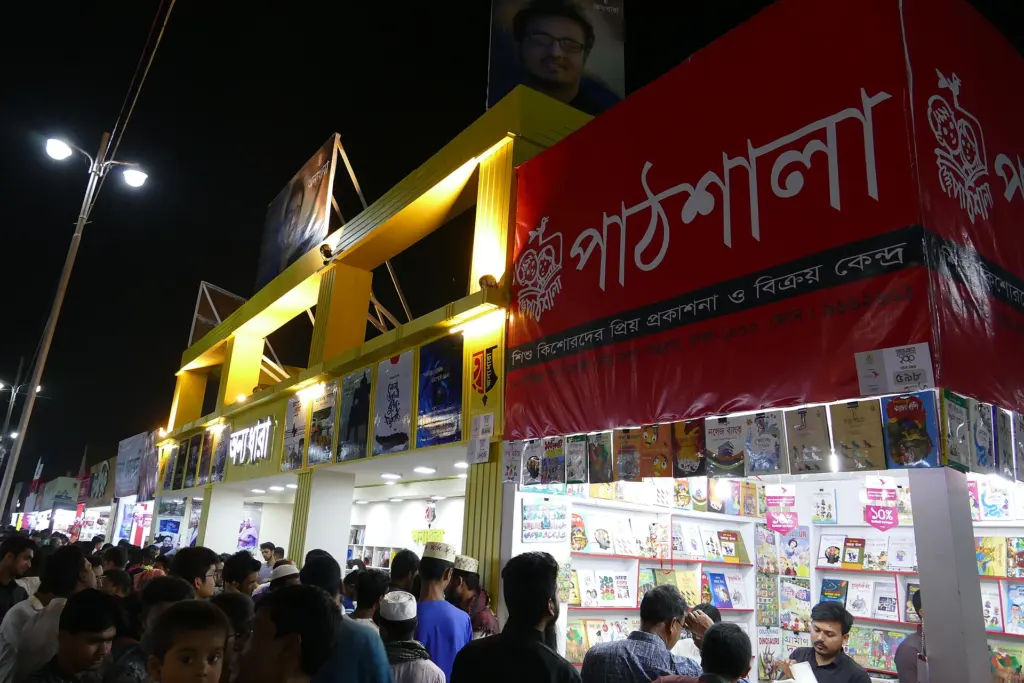
Pronunciation and Everyday Speech
Standard Kolkata Bengali grew out of the speech of Nadia and Kolkata in west-central Bengal. Bangladesh’s spoken standard carries an eastern accent and is shaped heavily by Dhaka. A Dhaka newsreader and a Kolkata one sound different within a sentence.
Casual speech pulls further apart. “What are you doing?” is “ki korcho?” in Kolkata. In Dhaka, a young person may say “ki korteso?” instead, depending on the company. A listener notices the accent at once, though, and rarely loses the meaning.
Vocabulary and Loanwords
Vocabulary is where a translator’s origin shows first. Bangladeshi usage tends to keep more words of Arabic and Persian origin. West Bengal usage leans towards Sanskrit-derived (tatsama) words and, in speech, more English. Both sets are understood on both sides.
| Meaning | More common in Bangladesh | More common in West Bengal |
|---|---|---|
| Water | pani | jol |
| Invitation | dawat | nimontron |
| Bath | gosol | snan |
| Guest | mehman | otithi |
The split tracks religion as well as geography, and the pattern is a tendency, not a rule. Many Bangladeshi Hindus say jol, many Muslims in West Bengal say pani, and plenty of speakers use both depending on who is listening.
Kinship Terms and Greetings
Family words carry the strongest social signal in the language. Bangla has separate words for almost every relative, and Muslim and Hindu families often use different ones. A leaflet that calls every aunt “mashi” will read as Kolkata-made to most Bangladeshi readers, even if every other word is right.
| Relative or phrase | Common Muslim usage | Common Hindu usage |
|---|---|---|
| Father | abba, abbu (also baba) | baba |
| Mother | amma, ammu (also ma) | ma |
| Mother’s sister | khala | mashi |
| Father’s sister | phupu | pishi |
| Father’s younger brother | chacha | kaka |
| Greeting | Assalamu alaikum | Nomoshkar |
For an interpreter, these words are also cues. A good one notices which set a speaker uses in the first minute and mirrors it. A stray “mashi” in a Bangladeshi village interview can cost trust that took an hour to build.
Two Spelling Authorities
Bangladesh and West Bengal each have a language academy, and the two do not always agree. Most differences affect a limited set of words. Even so, a document that mixes conventions looks careless to an editor on either side.
| Body | Founded | Role |
|---|---|---|
| Bangla Academy, Dhaka | 1955 | Publishes the standard (promito) Bangla spelling rules and dictionaries; government offices in Bangladesh are directed to follow them |
| Paschimbanga Bangla Akademi, Kolkata | 20 May 1986 | Issues spelling rules and dictionaries; no enforcement power, but widely followed by the West Bengal and Tripura governments and major publishers |
A sensible brief names the authority. “Follow Bangla Academy spelling” or “follow Paschimbanga Bangla Akademi spelling” is a one-line instruction that saves an editing round later.
What Are Sadhu Bhasha and Cholito Bhasha?
Sadhu bhasha is the older formal written style of Bengali. Cholito (chalita) bhasha is the standard colloquial style used for almost everything written today. Sadhu bhasha uses longer verb and pronoun forms and many more Sanskrit words. For example, “they did” is “tahara korilen” in sadhu style and “tara korlen” in cholito.
Cholito bhasha won the argument in the early twentieth century, helped along by Pramatha Chaudhuri’s journal Sabuj Patra. Newspapers, schools and broadcasters followed over the next few decades.
Sadhu bhasha still matters for one group of clients. Older land deeds, court records, inheritance papers and literary classics often use it. A translator who reads only modern prose may struggle with them. If your document is old or written in sadhu style, say so when you ask for a quote.
Is Sylheti or Chittagonian Just Bengali?
Officially, Bangladesh treats both as dialects of Bangla. Linguistically, the picture is less tidy. Sylheti and Chittagonian (Chatgaya) differ so much from standard Bangla in sound and grammar that many standard speakers cannot follow them. Some linguists classify them as separate languages.
| Variety | Main areas | Rough speakers | Can a standard-Bangla speaker follow it? |
|---|---|---|---|
| Sylheti | Sylhet Division; Barak Valley, India; UK diaspora | About 11 to 12 million | Often only partly |
| Chittagonian | Chattogram and Cox’s Bazar | About 13 million | Often not |
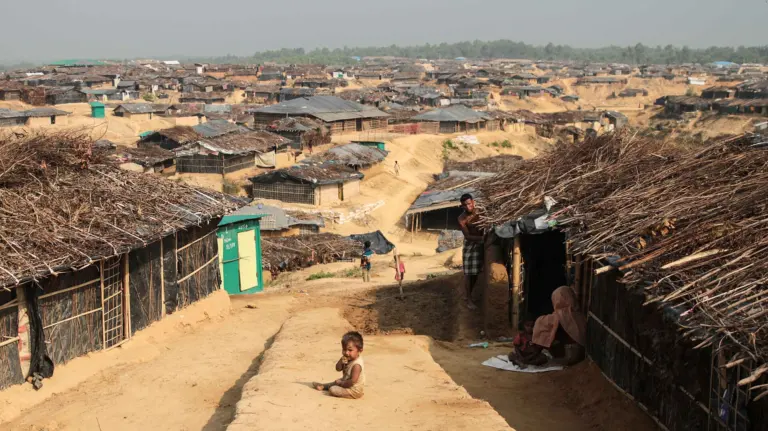
| Rohingya | Myanmar’s Rakhine State; refugee camps near Cox’s Bazar | About one million in Bangladesh’s camps | Often not |
| Noakhali, Barishal and other regional varieties | South and central Bangladesh | Many millions | Usually yes, with effort |
Most Sylheti and Chittagonian speakers also understand standard Bangla, especially if they went to school in it. Comprehension is often one-way, so the risk sits with a standard-Bangla interpreter trying to understand them, not the other way round.
Rohingya is the sharpest case. It is closely related to Chittagonian, and aid agencies in Cox’s Bazar once relied mostly on Chittagonian-speaking local staff. A 2018 study by Translators without Borders found that 36% of Rohingya refugees surveyed did not understand a simple sentence in Chittagonian. Programmes that need humanitarian interpreting in the camps now ask for Rohingya specifically.
Bengali vs Bangla When Hiring: What to Ask For
When you hire, the label on the form matters far less than where your audience lives and how they speak. Whether the job is written or spoken matters too. A request for “Bengali” or “Bangla” will get you a standard-language professional either way. The useful detail is everything you add after it.
Ask for Bangladeshi Bangla (bn-BD) if:
- Your interviews, audience or readers are in Bangladesh, including Dhaka, the districts or the camps
- The material covers Bangladeshi government, courts, media or NGOs
- Your interviewees are Bangladeshi Muslims, who make up most of the country
Choose West Bengal Bengali (bn-IN) if:
- Your readers or speakers are in Kolkata, West Bengal or Tripura
- The content follows Indian administrative or legal terms
- The audience is mainly Indian Bengali Hindus, where kinship and greeting terms follow the West Bengal pattern
For spoken work, add the variety. A field team going to Sylhet or Chattogram needs an interpreter who speaks the local variety. The languages page lists the regional varieties Dhaka Interpreters covers alongside standard Bangla.
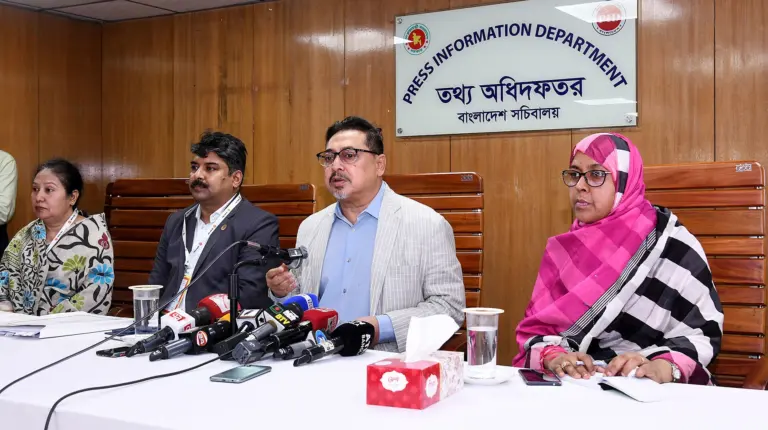
Newsroom work is the clearest example of the standard doing its job. In May 2026, Monowar Hossain of Dhaka Interpreters interpreted for Canadian investigative journalist Julian Sher in Dhaka. The training was for reporters from Prothom Alo and Samakal. Standard Bangladeshi Bangla was the right register, because the room was full of Dhaka journalists who work in it daily.
A mixed audience is the hard case. For a leaflet going to both countries, one neutral text with careful word choice works for most purposes. For a campaign, a health message or anything emotional, two localised versions usually work better.
None of these rules is absolute. A good interpreter will tell you when your plan needs a different variety.
When the Wrong Variety Gets Booked
Mistakes rarely announce themselves, because a fluent interpreter still sounds fluent. The warning signs show up later, in the transcript or in the room.
Watch for these patterns:
- Long answers coming back as short ones. An interpreter who cannot follow Chittagonian or Sylheti often summarises a two-minute reply in a sentence.
- Interviewees switching to halting standard Bangla to help the interpreter, which flattens quotes and loses detail.
- A translated questionnaire that respondents read correctly but answer oddly, because an aunt, a debt or a local office was named in the wrong register.
- Kolkata kinship terms or Hindu greetings in material for a conservative Bangladeshi Muslim audience, or the reverse.
- Mixed Bangla Academy and Kolkata spelling in one document, which a Bangladeshi editor will notice at a glance.
The fix is cheap if you build it into the request. Name the region and the variety, and say whether the job is speech or text. For interpreting, ask whether the interpreter has worked in that district before. For field and broadcast work, a fixer-interpreter who knows the district solves the variety problem and the access problem together.
Frequently Asked Questions
Should You Write “Bengali” or “Bangla” in English?
Either is correct, and both are understood. “Bangla” is now standard in Bangladesh’s own English usage and in many software menus.
“Bengali” remains common in academic publishing and in India. For a Bangladeshi audience, “Bangla” reads as the more respectful choice; for a global style guide, pick one and stay consistent.
Is “Bengali” Offensive to Bangladeshis?
No, though opinions differ on how much it matters. Some Bangladeshis see “Bangla” as the right name because of the 1952 Language Movement, and correct “Bengali” politely. Others, including many writers and academics, use both freely. Using “Bangla” with Bangladeshi audiences avoids the question entirely.
Can People From Kolkata and Dhaka Understand Each Other?
Yes, in almost all everyday and professional situations. The written standard is shared, and both sides consume each other’s films, songs and literature. Accent, slang and some vocabulary differ, so a Kolkata listener may miss a Dhaka joke. Conversation and formal speech still pass between them without an interpreter.
Does Bengali Use the Same Script as Hindi?
No. Hindi is written in Devanagari, while Bengali uses its own Bengali (Bangla) script, sometimes called Eastern Nagari. Both descend from the ancient Brahmi script and share a similar logic, with a horizontal headline joining letters. A Hindi reader cannot read Bengali without learning it, and the reverse is also true.
Is Assamese Written in the Bengali Script?
Assamese uses a closely related form of the same script, with a few letters of its own. Unicode encodes both in one block. The languages are related but distinct. So a Bengali translator is not automatically qualified for Assamese, even though the pages look similar.
What Language Do Rohingya Refugees Speak?
Rohingya refugees speak Rohingya, an Indo-Aryan language closely related to Chittagonian. Some also speak Burmese, and those who have lived in Bangladesh for years may pick up Chittagonian or some Bangla. For health, protection and legal work, humanitarian agencies generally ask for Rohingya interpreters rather than relying on Chittagonian or standard Bangla.
Why Is 21 February Called Ekushey?
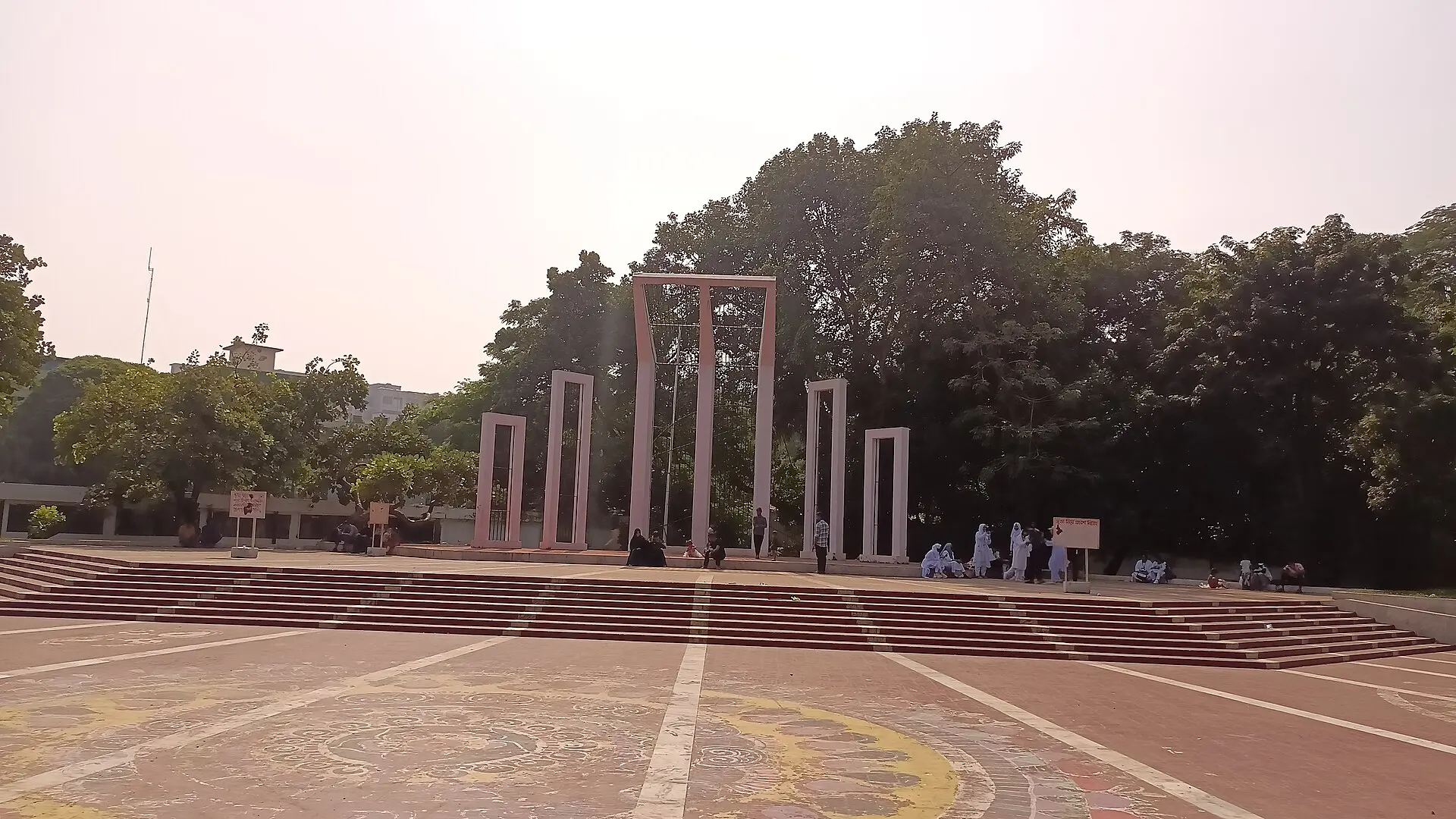
Ekushey simply means “twenty-one” in Bangla, short for Ekushey February. The day marks the 1952 shootings of students in Dhaka who demanded state-language status for Bangla. Bangladesh observes it as Language Martyrs’ Day, and many people walk barefoot to the Shaheed Minar monument at dawn. The world marks it as International Mother Language Day.
Is Bengali an Official Language in India?
Yes. Bengali is one of the 22 languages listed in the Eighth Schedule of India’s Constitution. It is the official language of West Bengal and Tripura and is used officially in the Barak Valley districts of Assam. Indian government translation work normally follows West Bengal spelling and administrative vocabulary rather than Bangladeshi conventions.
Do Bangladeshi Documents Use Bengali Numerals?
Often, yes. Bangla has its own digits, ০ to ৯. Bangladeshi government forms, court papers and land records frequently use them, sometimes alongside Western numerals. A certified translation should render every number accurately, including dates in the Bangla calendar, which some deeds and official notices still carry.
Which Dialect Is Standard Bangla Based On?
Standard colloquial Bengali developed from the speech of the Nadia and Kolkata region in West Bengal. Bangladesh shares that written standard but speaks it with an eastern accent shaped by Dhaka. Neither standard is more correct; each is the reference point for its own country’s media, schools and government.
Conclusion
Bengali and Bangla name the same language, so the label on a form is rarely what goes wrong.
The details that change an outcome are the audience’s country, the spelling authority, the community’s kinship words, and whether speakers use Sylheti, Chittagonian or Rohingya. Put those in the brief and most problems disappear. If you are planning work in Bangladesh, a request for a quote can include them from the start.