Rohingya and Chittagonian are close relatives in the Bengali-Assamese branch, but they are not interchangeable. In a 2018 camp survey, 36 percent of Rohingya refugees struggled with a basic Chittagonian sentence, so sensitive work needs Rohingya-fluent interpreters.
The question of rohingya language vs chittagonian usually lands on a programme manager’s desk at an awkward moment. A local interpreter from Cox’s Bazar says the two are “basically the same”. The refugees nod along, and the interviews seem to go smoothly.
Then a health worker finds that a mother never understood the dosage. Or a protection officer realises the interpreter softened a disclosure. The rest of this guide explains why that happens and how to check for it before it does.
Rohingya Language vs Chittagonian: Two Close Relatives
Rohingya and Chittagonian both belong to the eastern Indo-Aryan family, in the Bengali-Assamese group that also includes Standard Bangla, Sylheti and Assamese. Linguists treat them as separate languages, and the ISO 639-3 standard gives them separate codes.
Their shared ancestry explains the overlap. Their separate histories explain the gaps.
Chittagonian, called Chatgaya by its speakers, is spoken across Chattogram Division in south-east Bangladesh, including Cox’s Bazar district. It has more than 13 million speakers. Most of them also learn Standard Bangla at school, so their speech carries a steady stream of Bangla vocabulary.
Rohingya, which speakers write as Ruáingga, developed in northern Rakhine State in Myanmar. For generations its speakers lived beside Rakhine and Burmese neighbours, under a state that denied them citizenship. As a result, the language absorbed Burmese and Rakhine words. It also kept older Islamic vocabulary and had little contact with Standard Bangla.
| Feature | Rohingya (Ruáingga) | Chittagonian (Chatgaya) |
|---|---|---|
| Where it is spoken | Northern Rakhine State, Myanmar; camps in Cox’s Bazar; diaspora | Chattogram Division, Bangladesh, including Cox’s Bazar host communities |
| ISO 639-3 code | rhg | ctg |
| Main outside influences | Burmese, Rakhine, Arabic, Urdu, Persian | Standard Bangla, Arabic, Persian, some Portuguese |
| Written form | Hanifi Rohingya, Arabic-based and Latin-based spellings | Usually written in Bangla script, or not at all |
| Contact with Standard Bangla | Limited for most refugees | Daily, through school and media |
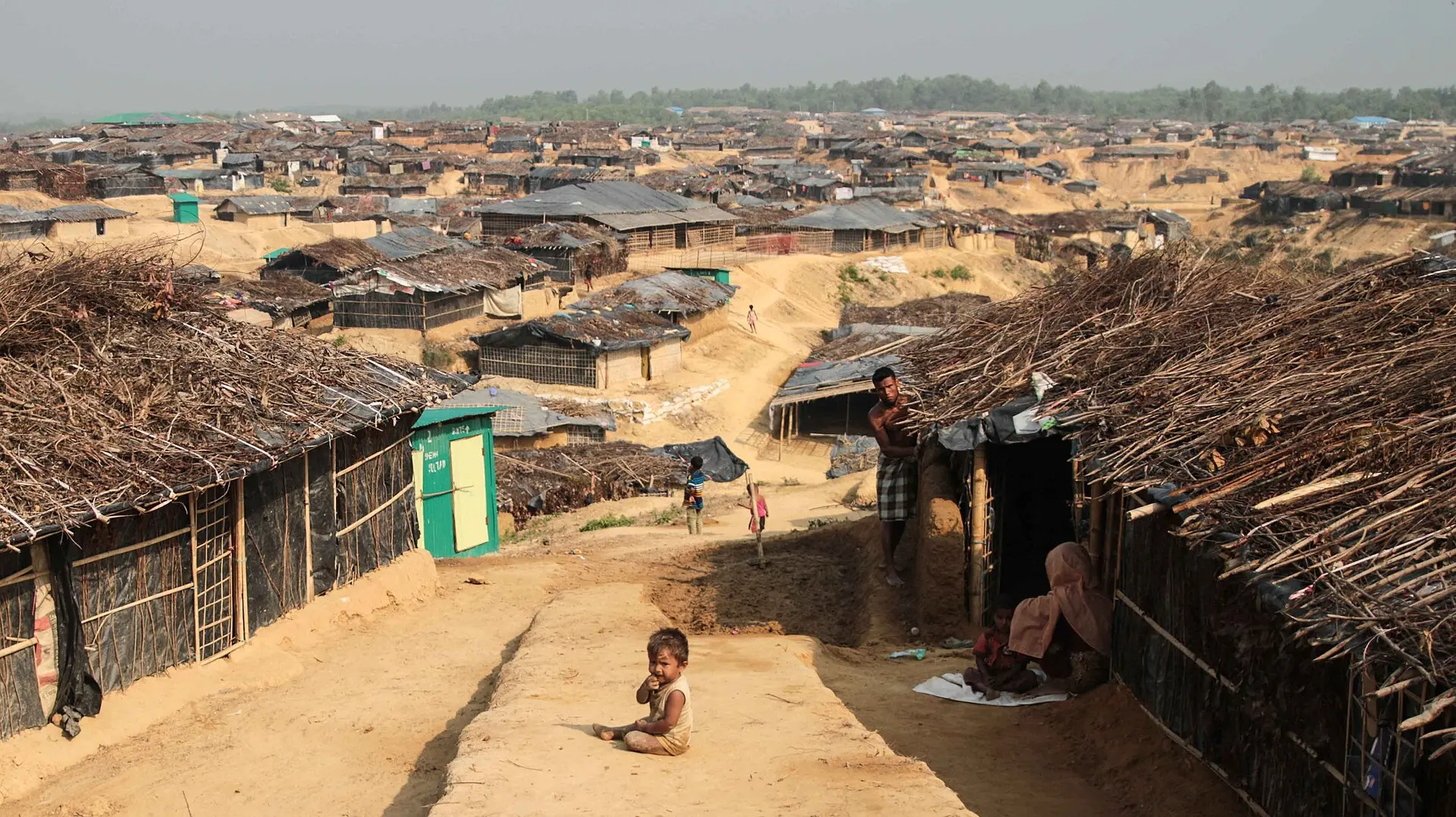
Close to one million Rohingya refugees live in Bangladesh, according to the UNHCR Rohingya situation data portal, most of them in the camps of Ukhia and Teknaf. The host population around them speaks Chittagonian. So aid agencies often reach for local interpreters first, and the real level of understanding matters a great deal.
How Mutually Intelligible Are Rohingya and Chittagonian?
Rohingya and Chittagonian are partly mutually intelligible, and the measured gap is larger than most speakers assume. Everyday conversation about food, family and weather usually works. Precise conversation about symptoms, rights or violence often does not.
The clearest evidence comes from Translators without Borders (TWB), now part of CLEAR Global. In August 2018 it surveyed a representative sample of adults in the Kutupalong-Balukhali camp. In that TWB comprehension study, 36 percent struggled with a basic Chittagonian sentence. Rohingya was the only spoken language every refugee understood.
Speakers’ own estimates point the same way. A Daily Star feature, drawing on TWB’s assessment, reported that Rohingya speakers put the similarity at around 70 percent, while Chittagonian speakers said nearer 90. In practice, the interpreter usually feels more confident than the refugee.
Geography matters too. Teknaf Chittagonian, at the district’s southern tip, sits close to northern Rakhine Rohingya; the speech of Chattogram city sits much further away. Both interpreters may still write “Chittagonian” on a CV.
| Evidence | What it found | Caveat |
|---|---|---|
| TWB survey, Kutupalong-Balukhali, 2018 | 36% struggled with a basic Chittagonian sentence | One camp; simple sentences, not technical terms |
| Speaker self-estimates (Daily Star, citing TWB) | About 70% similarity for Rohingya speakers, about 90% for Chittagonian speakers | Impressions, not a test |
| Internews survey, November 2017 | 62% of 570 refugees could not communicate with aid providers | Covers all languages used by responders |
| The New Humanitarian, June 2020 | Chittagonian remained the main bridge language in the response | Reporting, drawing on TWB research |
Even a 70 percent overlap leaves almost one word in three at risk. And the missing words are rarely random.
Which Words Do Interpreters Get Wrong Most Often?
Interpreters most often slip on the words that matter most, in health, family, legal status and gender. Greetings and market talk rarely cause problems. The risky vocabulary falls into three layers.
Burmese and Rakhine Borrowings
Rohingya carries many words borrowed from Burmese and Rakhine, especially for administration, documents, places and officials. A Chittagonian speaker from Bangladesh has never needed these words. So when a refugee describes a Myanmar identity card, a township office or a military rank, the interpreter may simply guess.
Protection interviews lean heavily on exactly this vocabulary. Details about displacement, documents and who did what to whom are where a guess does the most damage.
Arabic, Urdu and Persian Layers
Both languages carry Arabic and Persian loanwords from centuries of Islamic culture in the region. However, Rohingya speakers tend to use more religious and Urdu-influenced vocabulary in everyday speech, while Chittagonian speakers often substitute the Standard Bangla equivalent. For instance, an interpreter may reach for a Bangla word for “safety” or “protection” that the listener does not use.
Health, Kinship and Gender Terms
Health and gender terms show the sharpest false friends. A Rohingya mother describing her child’s diarrhoea may say “gaa-lamani”, which a Chittagonian listener hears literally as “my body is falling apart”, as NPR reported on the TWB glossary project. The interpreter hears a complaint about pain; the clinician never hears the word diarrhoea.
Gender vocabulary is harder still. Rohingya has no direct equivalent for “gender”, and a Rohingya translator quoted in TWB research said early renderings of “gender-based violence” came out as “violent women”.
TWB’s answer was a glossary for aid workers in English, Bangla, Rohingya, Chittagonian and Burmese, launched in 2018 with about 180 entries. A team that uses it is already ahead of one that relies on goodwill.
Does Rohingya Have Its Own Script?
Yes, Rohingya has its own script, called Hanifi Rohingya, but few refugees read it. Most information in the camps still has to travel by voice.
A group led by the scholar Mohammad Hanif created Hanifi Rohingya in the 1980s. It runs right to left and draws mainly on Arabic letter shapes, with extra marks for vowels, tones and nasal sounds.
The script entered the Unicode Standard in version 11.0, released in June 2018. The linguist Anshuman Pandey prepared the Unicode encoding proposal for Hanifi Rohingya, and its block runs from U+10D00 to U+10D3F.
Two other systems also circulate. Older Arabic- and Urdu-based spellings are used in religious settings. A Latin-based system known as Rohingyalish is popular online because it types easily on a phone.
| Writing system | Basis | Where you will see it |
|---|---|---|
| Hanifi Rohingya | Arabic-derived, right to left | Community schools, books, signage, some NGO materials |
| Arabic and Urdu-based spellings | Arabic script | Religious texts and older community writing |
| Rohingyalish | Latin alphabet | Social media, messaging, some learning materials |
| Burmese or Bangla script | Borrowed from other languages | Rarely satisfactory; neither matches Rohingya sounds |
The practical point for an aid team is literacy, not alphabet choice. In TWB’s 2018 survey, 66 percent of refugees said they could not read or write in any language. Audio messages, pictures and trained interpreters will reach far more people than a leaflet, however carefully typeset.
Where Standard Bangla and Chittagonian Interpreting Breaks Down
Standard Bangla interpreting breaks down first, and Chittagonian interpreting breaks down on the topics where errors cost the most. Most refugees have had little exposure to Standard Bangla, and Chittagonian and Bangla are not easily understood by each other’s speakers either.
TWB’s 2019 research described a chain that many surveys still follow. A questionnaire is written and approved in English, then translated into Bangla, and the enumerator interprets it on the fly into Chittagonian. Every step can shift the meaning, and nobody checks the version the refugee actually hears.
A failed interpreted interview rarely looks like failure in the room. TWB trainers have described an untrained interpreter who condensed a long answer into a few words, added his own commentary, and nodded when he had not understood the request. The transcript looked tidy. The data was not.
| Topic | Typical risk with a non-Rohingya interpreter | Possible consequence |
|---|---|---|
| Health and medicines | Symptoms, dosage and body terms misheard | Wrong treatment, missed follow-up, low trust in clinics |
| Protection and documentation | Burmese administrative terms guessed | Inaccurate case files, wrong referrals |
| Gender-based violence | Euphemisms lost, words softened or judged | Survivor stops disclosing, case closed too early |
| Mental health | Distress described in idioms that are taken literally | Under- or over-estimating risk |
| Informed consent | Purpose and data use paraphrased loosely | Consent that is not truly informed |
Health care shows the cost most clearly. A misheard symptom or dosage goes straight from the consulting room to the patient, with nobody in between to catch it.
Protection and gender-based violence work face the same gap, with less room to correct it afterwards.
How Do You Test a Rohingya Interpreter Before Hiring?
Test an interpreter on the vocabulary of the actual assignment, with a Rohingya speaker judging the result. A friendly corridor chat proves little, because small talk is exactly where the two languages overlap most.
A screening session can run in under an hour.
- Ask where the candidate grew up and how they learned Rohingya. A refugee, a Teknaf resident and someone from Chattogram city bring very different starting points.
- Give a short passage from the real assignment, such as a consent script or a clinic instruction, and ask for a spoken rendering in Rohingya.
- Have a second, trusted Rohingya speaker back-translate the recording into English or Bangla without seeing the original.
- Test a list of 15 to 20 high-risk words from the topic area, drawn from a TWB glossary where possible.
- Run a short role-play in which the “client” gives a long, emotional answer, and check whether the interpreter condenses or comments on it.
- Ask the candidate to explain a confidentiality rule back to you in their own words.
| Area | Strong result | Warning sign |
|---|---|---|
| Back-translation | Meaning intact, including hedges and numbers | Summary replaces detail; numbers change |
| Topic vocabulary | Uses the community’s terms and knows the euphemisms | Falls back on Standard Bangla words |
| Long answers | Renders in full, in the first person | “She says she is fine” after a two-minute answer |
| Not understanding | Asks for clarification openly | Nods and carries on |
| Neutrality | No added advice or opinion | Explains, scolds or reassures the speaker |
Once hired, the interpreter still needs one more check: who will they sit opposite?
Should the Interpreter Be the Same Gender as the Speaker?
For gender-based violence, sexual and reproductive health and many protection interviews, the interpreter should be the same gender as the person speaking wherever possible. The GBV Area of Responsibility tip sheet on working with interpreters sets this out, along with minimum training before an interpreter joins a session.
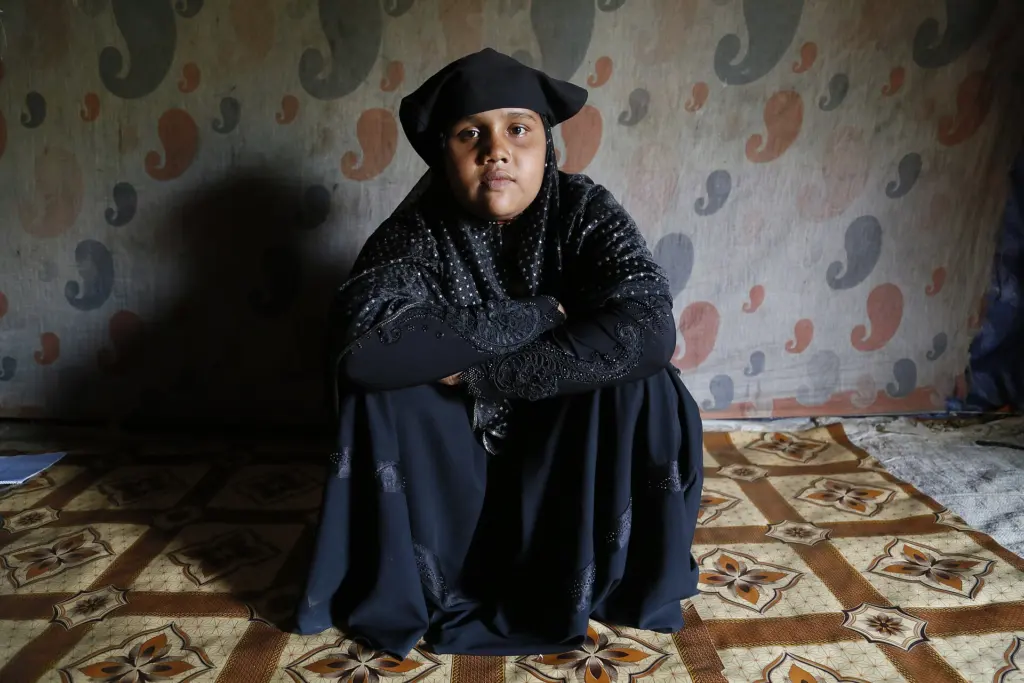
Language reinforces the cultural reason. TWB has reported that Rohingya women use a sociolect: words and pronunciations that men in their own community do not always recognise. A male interpreter, even a fluent Rohingya speaker, may miss the very terms a woman uses for menstruation, pregnancy or assault.
Female Rohingya-speaking interpreters are harder to recruit, so plan early rather than accepting whoever is available on the day. Where a same-gender interpreter truly cannot be found, ask the woman herself whether she is willing to continue, and accept a “no” without pressure.
Consent, Confidentiality and Respectful Terminology
Consent obtained through an interpreter is only valid if the person understood it in their own language. So the consent script deserves the same back-translation check as the clinical or protection questions.
Confidentiality has two sides in the camps. A Rohingya interpreter may live in the same block as the person being interviewed, or know their family. A host-community interpreter may carry local attitudes or tensions into the room. Ask about connections before each session, give people the option of a different interpreter, and make sure every interpreter signs and understands a confidentiality agreement.
Terminology carries weight too. Myanmar authorities have long called the Rohingya “Bengali”, a label that denies their history in Rakhine, so avoid describing the language as a Bengali dialect in front of refugees. The Government of Bangladesh uses the official term Forcibly Displaced Myanmar Nationals in many documents. Most humanitarian and media organisations use Rohingya, which is the name the community uses for itself.
Respectful practice is also practical. People who feel their language is recognised tend to speak more freely, which is the whole point of hiring an interpreter in the first place.
Choosing Between a Rohingya and a Chittagonian Interpreter
The right choice depends on the topic, the audience and the risk of a misunderstanding. A short decision guide helps.
A Rohingya-fluent interpreter is the safer choice when:
- the work covers health, protection, legal status or gender-based violence
- you are interviewing women, older people or recent arrivals
- the information will be quoted, published or used in a case file
- consent, data use or referrals must be explained
On the other hand, a Chittagonian-speaking interpreter may be good enough when:
- the conversation is logistical, such as directions, distributions or scheduling
- the speakers are host-community members rather than refugees
- a Rohingya-speaking colleague can check anything important afterwards
- the interpreter grew up near the border and has long camp experience
Many teams end up pairing the two. The Chittagonian speaker handles host-community work and logistics, and the Rohingya speaker takes anything sensitive. Neither list is absolute. A good interpreter from either group will tell you honestly when a conversation is beyond them.
Agencies such as Dhaka Interpreters, which supplies NGO and humanitarian interpreting, can help match the interpreter to the assignment rather than to the nearest available speaker.
FAQ
Is Rohingya a Dialect of Bengali?
Scholars disagree on how to label it. Some treat Rohingya as part of a Chittagonian dialect continuum within the Bengali-Assamese group, because the features overlap heavily. Others, and most Rohingya speakers, treat it as a separate language, which ISO 639-3 reflects with its own code. For aid work, the label matters less than the measured comprehension gap.
Can Bangladeshi Bengali Speakers Understand Rohingya?
Most Standard Bangla speakers from Dhaka or elsewhere understand very little spoken Rohingya. The two share many roots, but sounds, grammar and vocabulary differ enough that a Dhaka-based interpreter without Chittagonian or Rohingya background will struggle. Treat Standard Bangla as a working language for staff, and check the regional varieties an interpreter actually covers before booking.
What Do Rohingya Speakers Call Their Language?
Speakers call it Ruáingga, the Rohingyalish spelling of the same word, used for both the people and the language. You will see that spelling on community websites, learning materials and NGO resources made with Rohingya writers, so it is worth recognising when you search for materials or glossaries.
Do Rohingya Refugees Understand Burmese?
Some do, mostly men who studied, traded or dealt with officials in Myanmar. Many women and older people speak little or no Burmese, because schooling was out of reach for years. Burmese helps with documents and place names. It should never replace Rohingya for messages meant for everyone.
Is Teknaf Chittagonian Closer to Rohingya?
Yes, the Chittagonian of southern Cox’s Bazar, including Teknaf, is closer to Rohingya than the variety spoken in Chattogram city. Long contact across the Naf river explains much of the overlap. Even so, a Teknaf interpreter still needs testing on health, protection and gender vocabulary before sensitive work.
Can Machine Translation Handle Rohingya?
Not reliably for sensitive work. Rohingya has no single standard written form, and most refugees communicate by voice, so text-based tools have little good data to learn from. For health, protection and consent, a trained human interpreter remains the safe option, and any machine output should be checked by a fluent speaker.
Should Written Materials Be in Rohingya, Burmese or Bangla?
For most camp audiences, audio and visual materials in Rohingya work better than any written text, because self-reported literacy is low. Where writing is unavoidable, test a sample with the intended readers first, since Burmese or Bangla text may reach some educated men but miss many women and older people.
Is It Offensive to Call the Rohingya Language Bengali?
In many settings, yes. The Myanmar state has used “Bengali” to cast the Rohingya as foreigners, so the word carries a long history of exclusion, and refugees hear it that way. Linguists can discuss the Bengali-Assamese family accurately. In conversation with refugees, simply call the language Rohingya.
How Long Does It Take to Train a Rohingya Interpreter?
There is no fixed figure, and it depends on the person’s starting point. A fluent speaker still needs training in accuracy, neutrality, confidentiality and topic vocabulary. GBV guidance sets a minimum level of training before an interpreter joins survivor sessions, and refresher sessions keep standards from slipping.
Can Journalists Use the Same Interpreters as NGOs?
Often, but check the interpreter’s comfort with media work first. Journalism adds questions of attribution, identification and possible risk to sources. A fixer and interpreter for journalists should explain to every interviewee who will see the material and how they might be named.
Conclusion
Rohingya and Chittagonian share deep roots, but the 36 percent comprehension gap shows why they cannot be swapped casually. Use Chittagonian speakers for logistics and host-community work, and Rohingya-fluent interpreters, ideally of the same gender, for health, protection and gender-based violence. Test every interpreter on real assignment vocabulary with back-translation, and treat consent as part of that test.
Refugees will notice the difference, even when the transcript does not.